
Cherrapunji isn’t just a destination it’s a feeling. Mist that hugs the hills, rain that writes poetry on rooftops, and silence that somehow speaks louder than noise. If you’re planning a trip here, timing matters more than you think. This town’s landscape transforms greatly with the seasons. Every season presents you with the different sides of its magical face.
This guide breaks down the best time to visit Cherrapunji, season by season, while also helping you understand its culture, landscapes, waterfalls, and experiences—so you don’t just visit, you feel the place.
What’s the best time to visit? Let’s know;
The best time to visit Cherrapunji truly depends on what you want to experience. Some travelers come chasing clouds and thunderous waterfalls, while others prefer gentle weather and long walks without the rain interrupting their thoughts. There’s no wrong time only different moods of Cherrapunji.
Let’s break it down season by season: choosing the best time for your Cherrapunji trip
Cherrapunji during March to May – Pleasant Summers
Summer in Cherrapunji feels nothing like the rest of India. While cities sweat under harsh sun, Cherrapunji stays calm, green, and breathable. The temperature varies from 15°C to 25°C, creating an ideal condition for a site-seeing trip
This is the best time for first-time visitors. Waterfalls still flow gently, skies are clearer, and you can explore caves, viewpoints, and villages without worrying about slippery trails. Treks feel comfortable, photography is rewarding, and the town moves at an easy pace.
If you want to experience Cherrapunji without extremes this is your season.
Cherrapunji during June to September – The Monsoon
This is when Cherrapunji becomes legendary. Monsoon transforms the town into a living, breathing rainforest. Rainfall is intense, dramatic, and almost constant. The road glistens, clouds float at eye level, and waterfalls pound with power.
This one’s for the real rain enthusiasts out there. If you’ve ever wanted to experience nature in its rawest, loudest form this is it. However, landslides, slippery paths, and reduced visibility can affect travel plans.
Monsoon isn’t about ticking attractions off a list. It’s about slowing down, listening to rain, sipping hot tea, and letting the mist decide your plans.
Cherrapunji during November to February – Winter Season
The winter season is a quieter and softer version of Cherrapunji: its temperature ranges between 5°C to 15°C, foggy mornings, and a crisp night. Rainfall is at its minimum, hence the peace and serenity around. It’s a good time to travel if you enjoy peace and solitude. The waterfalls are not at peak height, but there are lovely views from various outlooks. Winter is ideal for cultural exploration, village walks, and enjoying the stillness of Meghalaya’s hills
What makes the town of Meghalaya’s Cherrapunji so special? Let’s know through its culture
Meghalaya is the abode of clouds, but Cherrapunji is its soul. Beyond rain and scenery, there lies a deep-rooted cultural richness in this important town
A Rich and unique tribal culture, with Jaintia tribes.
This place has a number of indigenous tribes, mainly those from the Khasi and Jaintia communities. The following of a matrilineal society where lineage is traced through the female line is as rare as deeply respected here. Traditions here aren’t preserved in museums; they’re lived daily
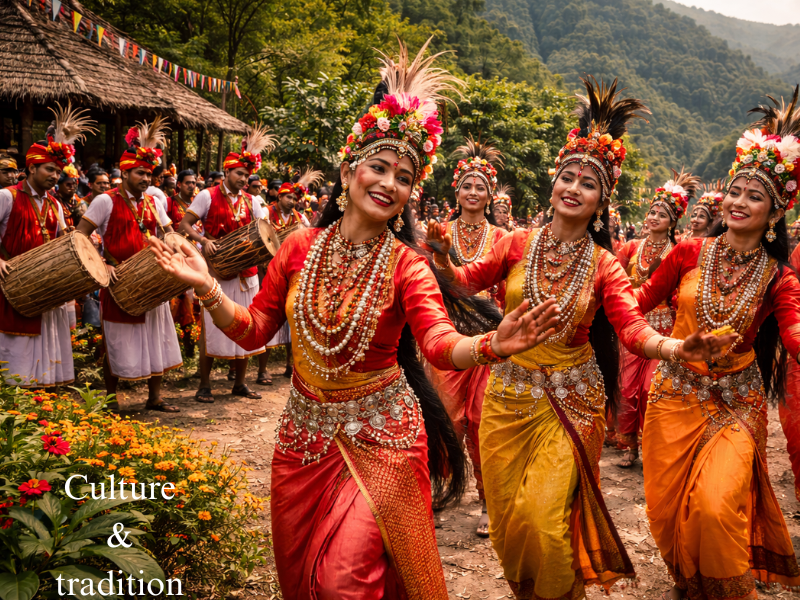
Traditional clothing
The local attire embodies simplicity and elegance. The handwoven clothes and fabrics, shawls, and wraps usually adorn the local populace. Often, they prefer wearing them on special occasions like festivals. The local clothes exhibit practicality and elegance, complementing the misty environment.
Religious ceremonies
Faith in Cherrapunji revolves around Christian and native religions. Churches are present in serene surroundings near hills, with prayers constituting an integral part of the place.
Culinary traditions
The food is plain, hearty stuff that focuses on rice, local vegetables, smoked meats, and mild spices. There are no meals to hurry or finish; meals are to sustain self and dialogue.
Handicrafts
“Bamboo products” or “handicrafts” are the local crafts of the region, showcasing the pride of the people in their craftsmanship. This is different from the local crafts found elsewhere in the country. Local handicrafts in Cherra Punji have been crafted over a period of time with great care and skill
“Rain, mist & memories”: what to see in Cherrapunji
Enjoy the magnificent view of the Seven Sister Falls
Seven Sister Falls comes alive during monsoon, cascading down cliffs in multiple streams. It is not just something to look at: it is something to pause conversation over.
Exploring Mawsmai Cave
Mawsmai Cave is an adventurous glance into Meghalaya’s underground world. With the narrow, winding passages and remarkable limestone formations leading to some natural chambers, it is an exciting though easily accessible cave experience.
A walk known wettest place on Earth – Mawsynram
Mawsynram holds the record for the highest annual rainfall on Earth. Walking here feels surreal—clouds move faster than people, and rain feels like a constant companion rather than an inconvenience.
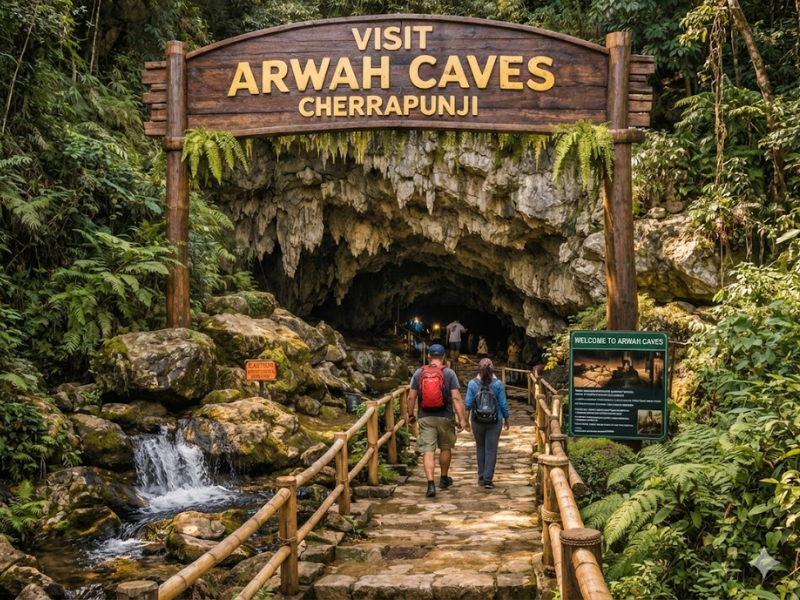
Visit Arwah Caves
Arwah Cave is quieter, darker, and more mysterious. The formation of fossils within the cave adds to the sense of wonder and makes it applicable to those who are slow explorers.
Hope a trek to the Double-Decker Living Root Bridge
“Double Decker Living Root Bridge” is not only an attraction; it is an indication of how human beings are harmonious with nature. It is indeed a strenuous yet rewarding hike to this beautiful bridge that seems to come alive beneath your feet.
Cherrapunji: “Where the rain turns into waterfalls”
Waterfalls here don’t just exist they emerge from clouds, cliffs, and forests. Wateralls in Cherrapunji just hits different the beauty of mist in the air ,the aroma and the weather just hits different. They are the best escape from a hectic routine from the daily life.
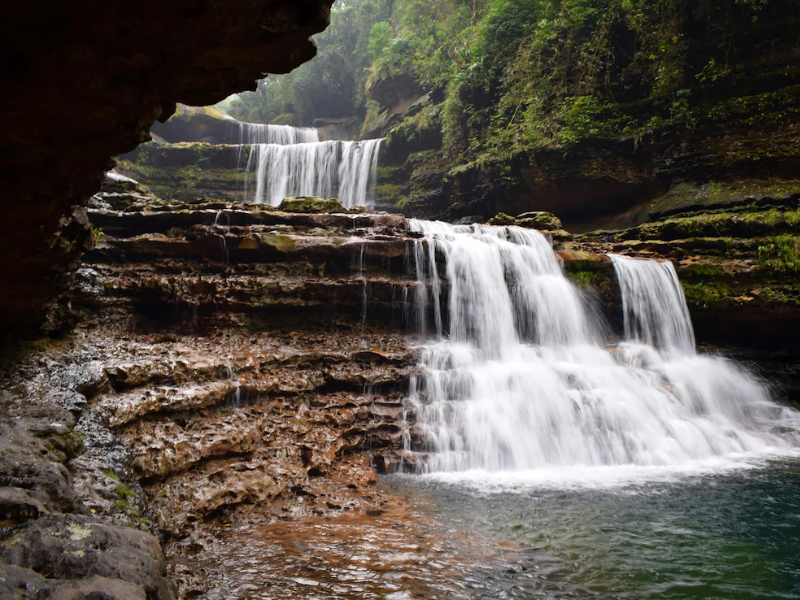
Prut Waterfall
Wild and powerful, best experienced during monsoon when it roars with full force. It is also known as Wah Urwan. Prut Waterfall still feels raw and untouched, hidden deep within Cherrapunji’s lush greenery. It comes really alive during the monsoon, where rain-fed streams crash down with powerful force off the cliffs. You often hear the roar of the water before you see it, adding to the drama of the moment. The short walk to reach the falls can be uneven, but that’s part of the adventure. Less crowded and more peaceful, it’s best visited carefully during heavy rains when the view is at its most magical.
Lyngksiar Falls
Waterfall-noiseless, calm, and serene amidst greenery, where one can sit with their loved ones for quiet moments. The gentle Lyngksiar Falls flows softly and serenely amidst dense greenery. It is a place where time stands still and thoughts are light. Away from the noisier waterfalls of Cherrapunji, this one beckons one to stop and simply sit. Perfect for quite moments, soft conversations, or to just listen to nature breathe.
Janailar Falls
Less popular and quiet, perfect for people who like to avoid the crowds on the more popular routes. Janailar Falls is the quiet side of Cherrapunji, far removed from the general tourist fray. The tranquil atmosphere is perfect for people who enjoy the quieter side of their journeys. Nature is slow and calm here, creating the perfect environment to decompress from the noise of the world.
Pung Lyer Falls
The water fall is hidden and raw, and it is as if nature has conveyed a secret to you, and to you alone. Pung Lyer Falls is in one of the most remote corners of Cherrapunji, and reaching here is thus very much a quiet discovery. It is surrounded by dense greenery, and flows most during the recent months of monsoon when the water is fresh and bubbly. The area remains mostly virgin, with hardly any visitors found. Standing here feels intimate, like nature shared a secret, meant for only those who took an effort to reach it.
FAQ’s
Q: Do I need permits for Cherrapunji Root Bridges?
Indian tourists do not need any permits to visit Cherrapunji and the root bridges. Foreigners will have to show their valid Indian visa, but do not need any other permission. It is advisable to always carry an ID, as there may be some random vehicle checks on the roads.
Q: Why is Cherrapunji famous?
Cherrapunji, or Sohra, is most famous for being one of the wettest places on earth.
Q: When is the best time to visit Cherrapunji?
Cherrapunji’s weather is generally nice between October and May when it is relatively dry. The monsoon period from June to September brings heavy rains and might prevent you from doing outdoor activities.
Q: Are there any trekking options available in Cherrapunji?
Yes, there are some excellent trekking options that you can enjoy in Cherrapunji, especially if you are heading to the Double Decker Living Root Bridge and the Nongriat village.